Who's the Best for Data Integration: Camunda vs Process Street
Teams comparing Camunda and Process Street for data integration face a concrete decision: one is a BPMN engine built for developers, the other an operations platform that embeds compliance inside the same workflow. This choice directly determines how quickly your audit trails form and whether your data stays inside the tools your non-technical teams already use.
By the end of this article you will see the exact API and security differences in the Features Compared section, the pricing models listed in Pricing Compared, and a clear recommendation for your use case in the Final Verdict.
Quick Verdict: Who's the Best for Data Integration
Process Street wins for teams that need no-code workflow automation with built-in compliance, while Camunda serves developers who want open-source BPMN orchestration.
Teams focused on compliance-driven environments benefit from Process Street's SOC 2 Type II certification and ISO 27001 certification. These certifications support secure data handling across enterprise workflows.
Process Street also provides HIPAA compliant features with a BAA available upon request, plus GDPR and CCPA compliance. These capabilities matter for organizations handling sensitive data integration tasks.
Camunda offers open-source BPMN orchestration for developers who prefer custom-coded environments. This approach works well when teams need extensive flexibility in process orchestration and data mapping.
Deployment preference serves as the third deciding factor. Process Street delivers a SaaS solution available on AWS Marketplace and is trusted by 3,000+ companies and 1m+ users.
At a glance: how Process Street compares to Camunda on the features that matter most.
| Feature | Process Street | Camunda |
|---|---|---|
| Data Integration | Zapier, Power Automate, Tray.io, Make, Public API | REST, Kafka, PostgreSQL, Angular, Advantco GCP, PostGrid, MC |
What Is Process Street?
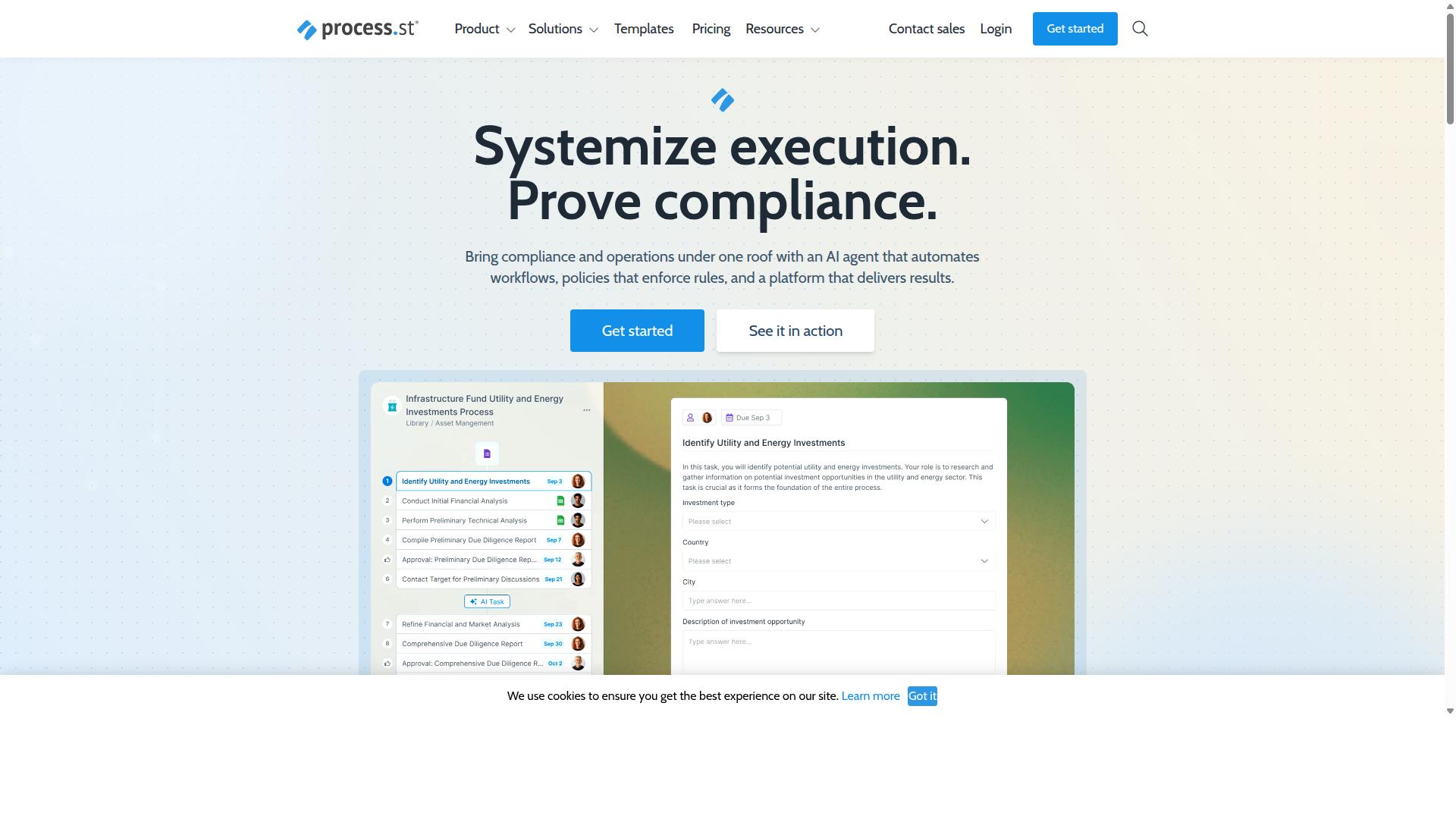
Process Street is a compliance operations platform that turns documented policies into AI-powered, audit-ready workflows. The platform helps organizations standardize processes and maintain operational consistency across industries.
Three main products power this approach. Docs handles document management and policy control. Ops manages workflow automation and process orchestration. Cora serves as an AI compliance and risk agent.
The company serves organizations that need to prove compliance through structured workflows. These companies rely on the platform to enforce policies and deliver audit-ready proof of their operations.
What Is Camunda?
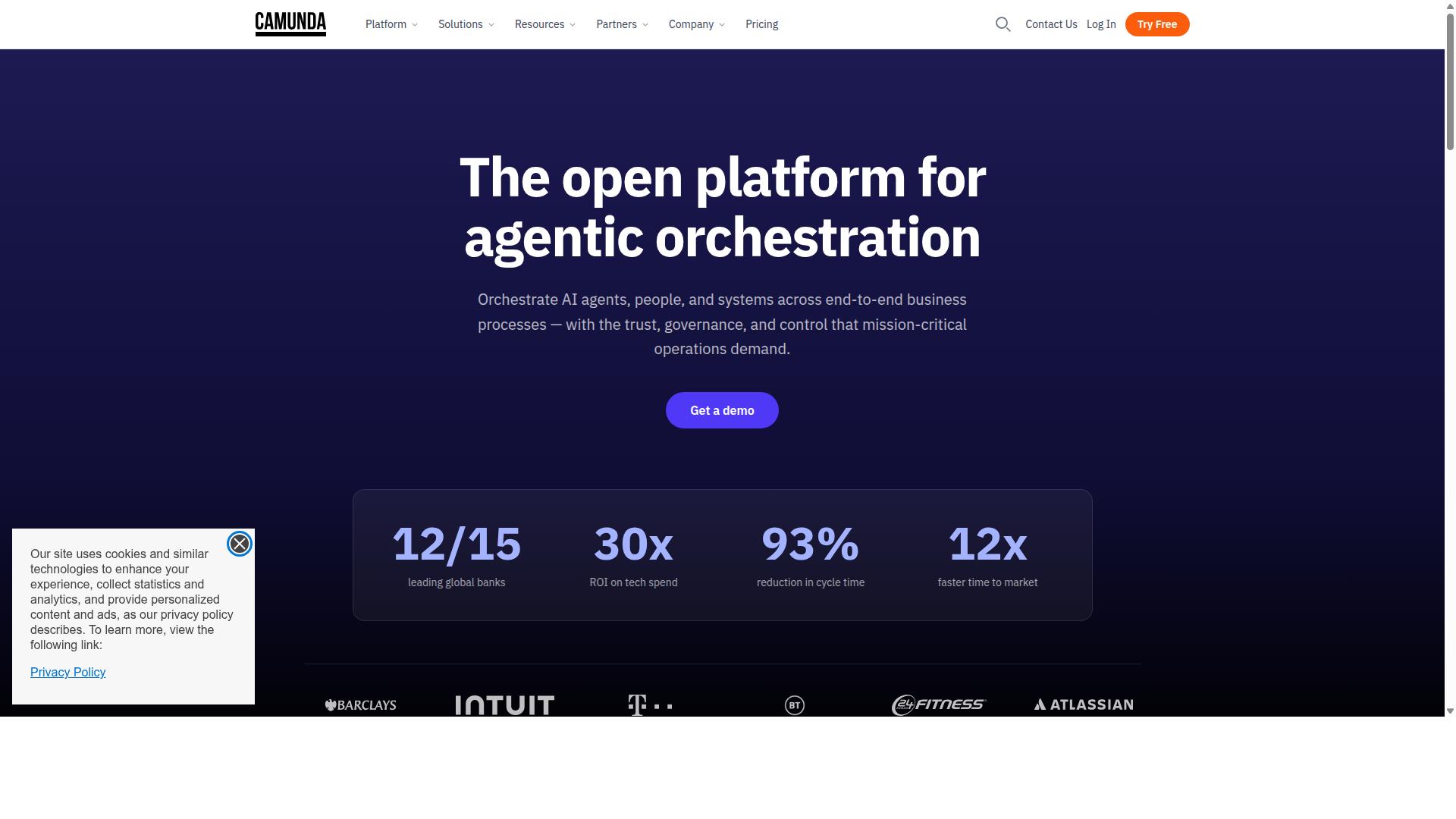
Camunda is an open-source workflow and decision automation platform built around the BPMN 2.0 standard. The platform targets technical teams who need fine-grained control over process execution and decision logic.
Its architecture follows a developer-centric model that requires programming skills to implement and maintain. Organizations often deploy Camunda when they need to orchestrate complex interactions between microservices.
Support for BPMN and DMN standards allows teams to define both process flows and business rules in visual models. These models then execute directly within the runtime environment.
Many development teams use Camunda for microservices orchestration because the platform integrates with containerized applications and message brokers. This approach works well in environments where custom code drives most business logic.
Teams that prefer visual process design over coding may find the setup requirements more demanding. The platform's strength lies in technical flexibility rather than rapid deployment for non-technical users.
Features Compared
Process Street and Camunda differ significantly in how they handle integration depth, security controls, and infrastructure reach. These three factors determine which platform fits specific data integration needs.
Data Integration and API Capabilities
Process Street offers native connectors and Zapier-style automations, while Camunda relies on custom code for most external system calls. The platform provides integrations with Zapier, Microsoft Power Automate, Tray.io, Make, and Public API access.
Process Street includes CRM and ERP integration examples through Microsoft Power Automate, Tray.io, and Make. Camunda requires developer-built connectors for similar functionality. This difference affects implementation time and technical resource requirements.
Security and Compliance for Data Handling
Process Street provides SOC 2 Type II and ISO 27001 certifications with built-in permission controls and immutable audit trails. The platform maintains compliance with HIPAA, GDPR, and CCPA standards. Data never trains AI models, protecting sensitive information throughout workflows.
Camunda offers security options that require configuration by the implementing team. Process Street includes these controls as standard features. Organizations benefit from documented compliance without additional setup work.
Scalability and Global Data Residency
Process Street supports regional data residency in six geographies and scales to millions of workflow runs without infrastructure management. Available regions include US, UK, Canada, EU, Australia, and UAE. Camunda can run anywhere but demands self-managed scaling infrastructure.
Process Street handles enterprise automation through AWS CIS compliant infrastructure. Organizations avoid server management while maintaining data sovereignty across global operations. This approach reduces operational overhead compared to self-hosted alternatives.
Pricing Compared
Process Street lists transparent subscription tiers; Camunda pricing depends on deployment model and vendor support contracts. This difference matters for data integration projects because teams need predictable costs when connecting multiple systems.
The Startup plan supports up to 5 users with 100 automation actions each month. It includes unlimited workflows and tasks plus 5,000 Data Set records for simple integration scenarios.
Teams that need more flexibility can move to the Pro plan. This tier removes fixed action limits and allows custom API call volumes for broader data synchronization needs.
The Enterprise plan adds dedicated support and custom integrations for complex data governance requirements. Organizations can also access unlimited Public API usage and personalized training when scaling process orchestration across multiple systems.
Camunda offers both open-source and paid enterprise editions without fixed public pricing. This approach works well for teams with strong in-house development resources but creates budgeting challenges for organizations that need predictable SaaS integration costs.
Who Should Choose Process Street
Operations, compliance and HR teams that need audit-ready workflows without writing code should choose Process Street. These teams often work in financial services, healthcare, real estate and manufacturing where data accuracy matters most.
Process Street serves industries that handle sensitive information and require strict documentation standards. Teams can build workflows that stay audit-ready from day one.
Research suggests that organizations using structured workflow platforms see efficiency gains. IMCD UK reported 30% faster documentation and 75% reduction in setup time after adopting the platform.
Process Street works well for employee onboarding, client onboarding and ISO compliance work. Quality tracking and document control become simpler when teams use a no-code platform instead of custom development.
Teams in operations, customer management, compliance, human resources, finance and IT security all benefit from the same approach. Professional services and technology companies also use the platform for capital markets and property management tasks.
The platform supports use cases that need both data integration and process orchestration. Teams can connect with CRM integration, ERP systems and SQL databases through native integrations rather than writing custom code.
Process Street provides audit trails and user permissions that financial services and healthcare organizations require. These features help teams maintain compliance automation across different departments.
Real estate and manufacturing companies often need data synchronization between multiple systems. The platform handles both real-time sync and batch processing requirements without requiring technical expertise.
Organizations that want to avoid the complexity of BPMN and process orchestration tools find Process Street easier to adopt. Zapier alternatives exist for teams that need more structure than basic automation tools provide.
Who Should Choose Camunda
Engineering teams that require deep customization or run microservices architectures often choose Camunda.
The platform offers open-source licensing that gives developers full control over the workflow engine. This approach works well when teams need to embed process automation directly inside custom applications.
Camunda provides flexibility for organizations with complex technical requirements. Developers can modify the engine code and integrate it into existing infrastructure without licensing restrictions.
Teams that prefer building their own connectors and managing their own deployment cycles may find this model suitable. The open-source nature allows complete visibility into how processes execute.
However, this level of control comes with added responsibility. Teams must handle maintenance, updates, and security patches themselves rather than relying on a managed service.
Organizations focused on data integration through custom code often select this route. The platform supports BPMN standards and provides APIs for programmatic workflow management.
Companies with dedicated engineering resources and specific architectural needs may benefit from this approach. The flexibility to tailor every aspect of process execution appeals to technical teams.
Final Verdict
Choose Process Street when compliance and speed-to-value outweigh the need for custom code. This decision matters most for teams handling sensitive data across multiple regions.
Compliance certifications often separate the two platforms. Process Street maintains documented security standards that meet enterprise requirements. Camunda requires teams to manage certification validation independently.
No-code speed determines how quickly teams see results. Process Street delivers immediate workflow functionality without development resources. Camunda typically demands coding expertise to achieve similar outcomes.
Global data residency affects organizations with strict regional requirements. Process Street provides clear residency options through its cloud infrastructure. Camunda setups depend on individual deployment configurations.
Contact sales remains available for teams evaluating either platform. Support via email and chat delivers a 5 minutes average response time with a 98% customer rating. These response metrics help teams resolve questions quickly during evaluation periods.