Top 7 Alternatives of Flokzu
Many teams switch from Flokzu after discovering limits with advanced audit trails and policy enforcement. These gaps force manual workarounds. The change often happens when compliance requirements outgrow the original setup.
By the final section you will see the seven strongest alternatives ranked by workflow depth, audit readiness, and pricing structure. You will also have the exact criteria used to crown Process Street as the top pick and the steps to match each option to your own requirements.
What to Look For in a Flokzu Alternative
Seven core capabilities separate strong BPM platforms from legacy workflow tools. These features determine whether a platform will support growing teams or create new bottlenecks as processes become more complex.
- Native SOC 2/ISO audit trails that record every change, approval, and user action without requiring external tools or manual logging
- AI-powered task routing that automatically assigns work based on workload, skills, and priority without manual intervention
- Visual process mapping with export capabilities that let teams document workflows and share them across departments
- 200-plus connectors including Zapier, Make, and n8n for connecting with existing business applications
- Role-based access with SSO to maintain security while allowing team members appropriate permissions
- SLA-based analytics dashboards that track performance against defined service targets
- Template marketplace with at least 1,000 pre-built workflows for common business processes across industries
These capabilities matter because scaling teams face increasing process complexity. Manual workarounds and limited integrations create friction that slows growth.
Teams need systems that maintain compliance standards while adapting to new requirements. Without proper audit trails and access controls, expanding operations becomes risky.
Pre-built templates and automation features reduce the time needed to implement new processes. This allows growing organizations to maintain consistency across departments and locations.
1. Process Street - Best Overall
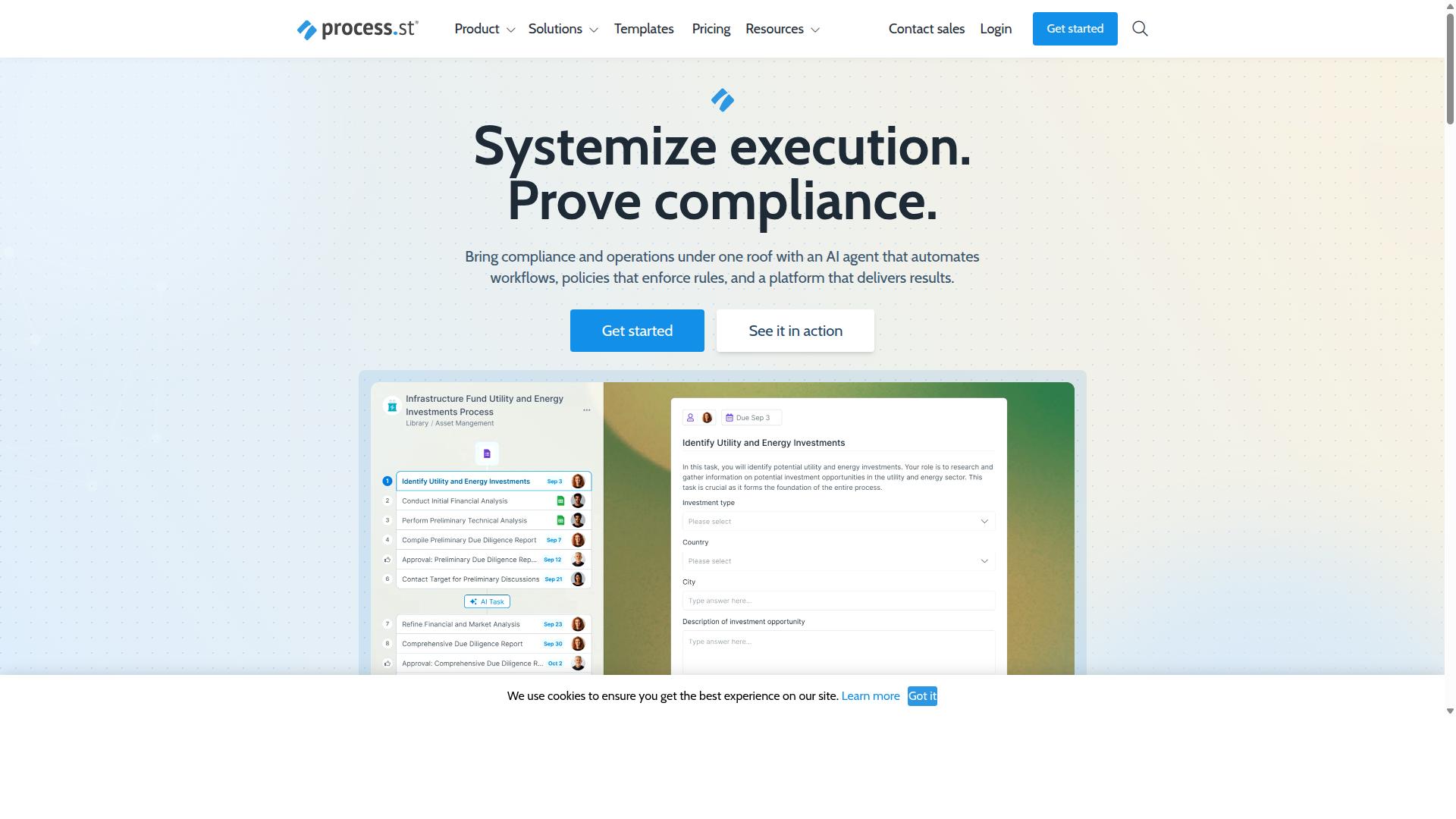
Process Street delivers enterprise-grade workflow automation with built-in policy governance and audit-proof documentation. The platform serves over 3,000 organizations and supports more than one million users worldwide.
Teams use the system to convert policy documents into executable workflows through its Docs and Ops products. This approach eliminates manual handoffs between compliance teams and operations staff.
The platform also includes Cora, an AI agent that monitors regulatory changes and flags potential risks. Organizations report reduced setup times and standardized onboarding across distributed teams.
Workflow Automation and Policy Control
Build AI-powered workflows directly from your policy documents. The Ops product turns policy content into automated sequences using Process AI and conditional logic.
Docs maintains version-controlled policy libraries while Ops executes the corresponding workflows. When policies update, the system pushes changes to active workflows without manual intervention.
Users connect external systems through integrations with Zapier, Microsoft Power Automate, Tray.io, Make, and public API access. This connectivity allows data to flow between Process Street and existing business applications.
Compliance and Audit-Ready Features
Every workflow step generates an immutable audit trail that satisfies SOC 2 Type II, ISO 27001, and 10 additional regulatory frameworks. The system maintains compliance records for ISO 9001, SOX, FDA, and other standards.
Audit trails export directly to PDF and CSV formats for external review. Role-based access controls ensure only authorized personnel can view or modify sensitive workflow data.
The platform stores data on AWS infrastructure and maintains HIPAA and GDPR compliance. Organizations can request a Business Associate Agreement when handling protected health information.
Pricing and Plans
Three transparent tiers accommodate growing teams from startup to global enterprise. The Startup plan supports 5 users and 10 guests with 100 automation actions per month and 5,000 Data Set records.
The Pro tier removes user limits and expands Data Set capacity to 10,000 records. Custom automation actions and API calls scale with team requirements.
Enterprise includes unlimited Data Set records, dedicated customer success management, and fully-managed workflow implementation. Organizations also receive process consulting, health audits, and personalized team training.
2. Vanta
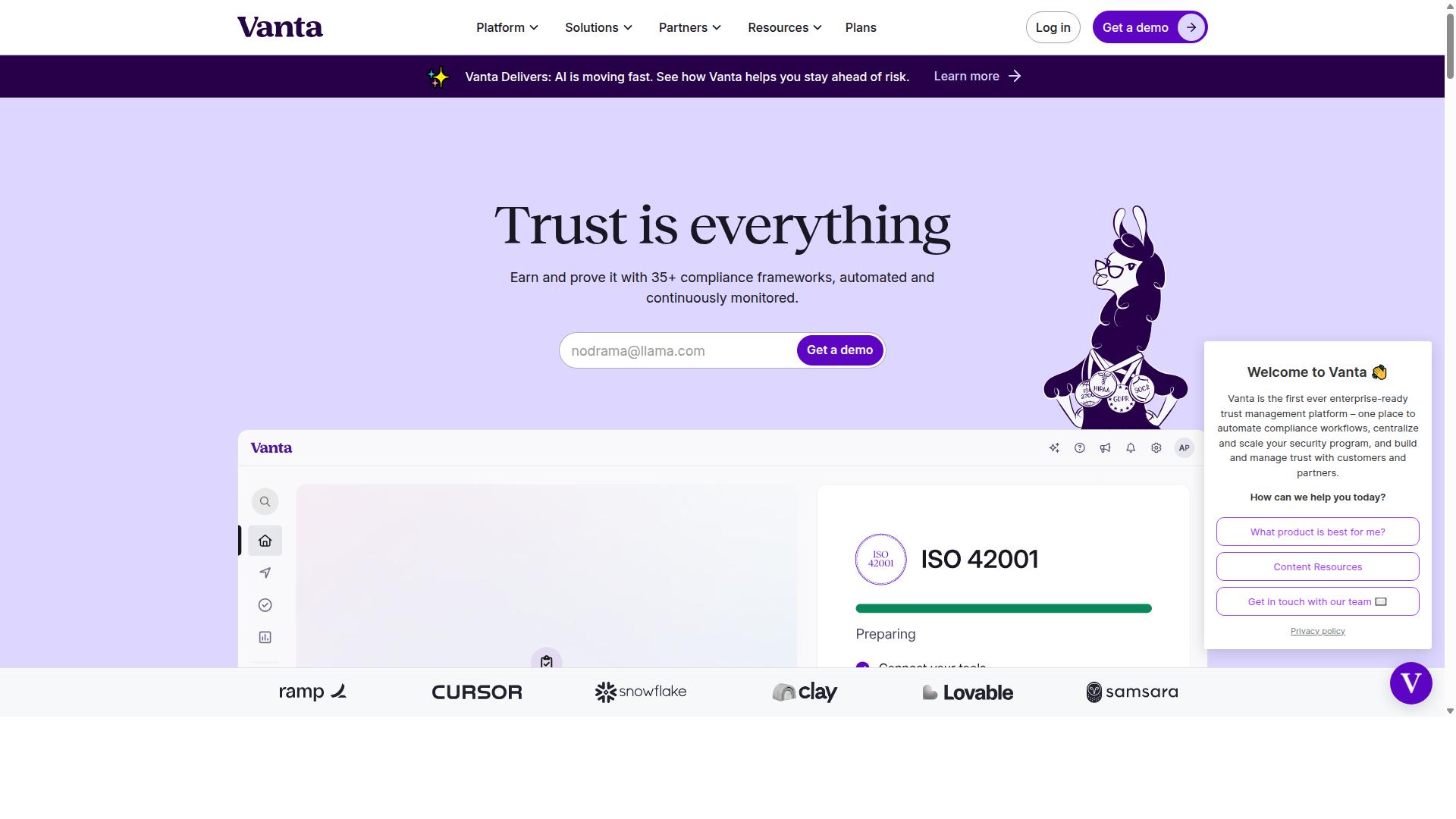
Vanta automates security compliance evidence collection across cloud environments. The platform gathers documentation for SOC 2, ISO 27001, and HIPAA certifications while monitoring control effectiveness.
Its primary strength lies in continuous evidence gathering rather than business process design. Organizations use Vanta to maintain audit readiness without manual spreadsheet tracking.
Vanta lacks native BPM workflow modeling capabilities. Users seeking approval flows or process orchestration must connect external tools through available integrations.
Deeper automation requires third-party connectors to handle task routing and form submissions. This approach works when compliance evidence collection is the main priority over workflow customization.
Teams evaluating Vanta should consider whether their needs center on certification maintenance or process redesign. The platform serves organizations focused on security frameworks rather than general business process management.
3. Diligent
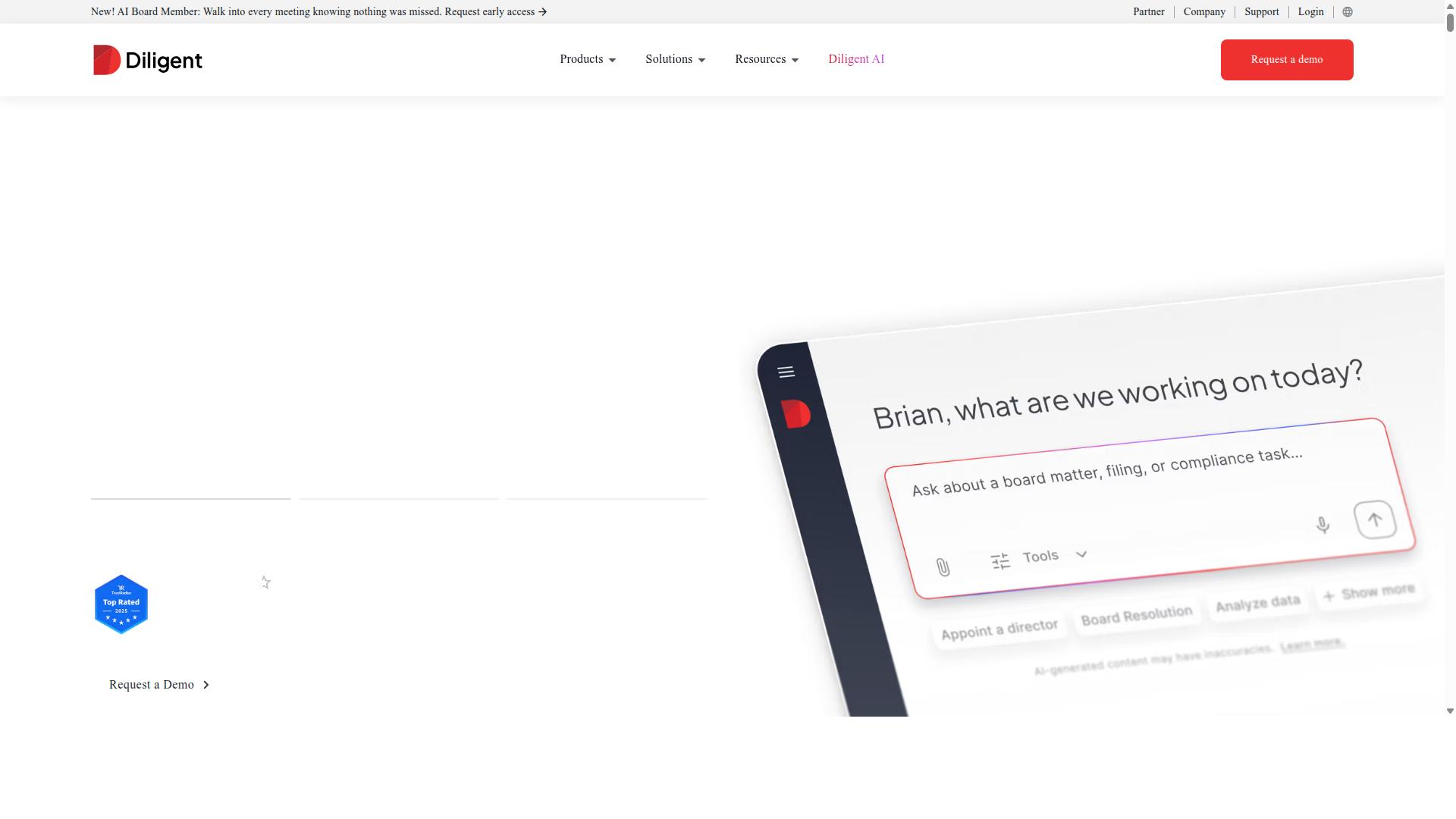
Diligent provides governance, risk, and compliance tools primarily for boards and audit committees. The company focuses on meeting management, policy enforcement, and third-party risk tracking. These offerings serve public companies, private firms, nonprofits, and educational institutions across multiple industries.
The Diligent One Platform centralizes board management and GRC activities. Products include Diligent Boards for meeting prep and data security, BoardEffect for nonprofits and higher education, and Entities for subsidiary records. Additional modules cover Policy Manager, Third-Party Risk Management, and AI Risk Essentials for enterprise risk management.
Workflow automation capabilities center on governance processes rather than general business process management. Low-code workflow design options are limited compared to dedicated BPM software platforms. Custom process modeling and task automation typically require assistance from certified partners.
Target users include General Counsel, Corporate Secretaries, C-Suite executives, Risk Managers, Compliance Officers, and Internal Auditors. The platform addresses compliance management needs for financial services, healthcare, energy, and government organizations. Document management and audit trail features support regulatory requirements in these sectors.
4. Scrut Automation
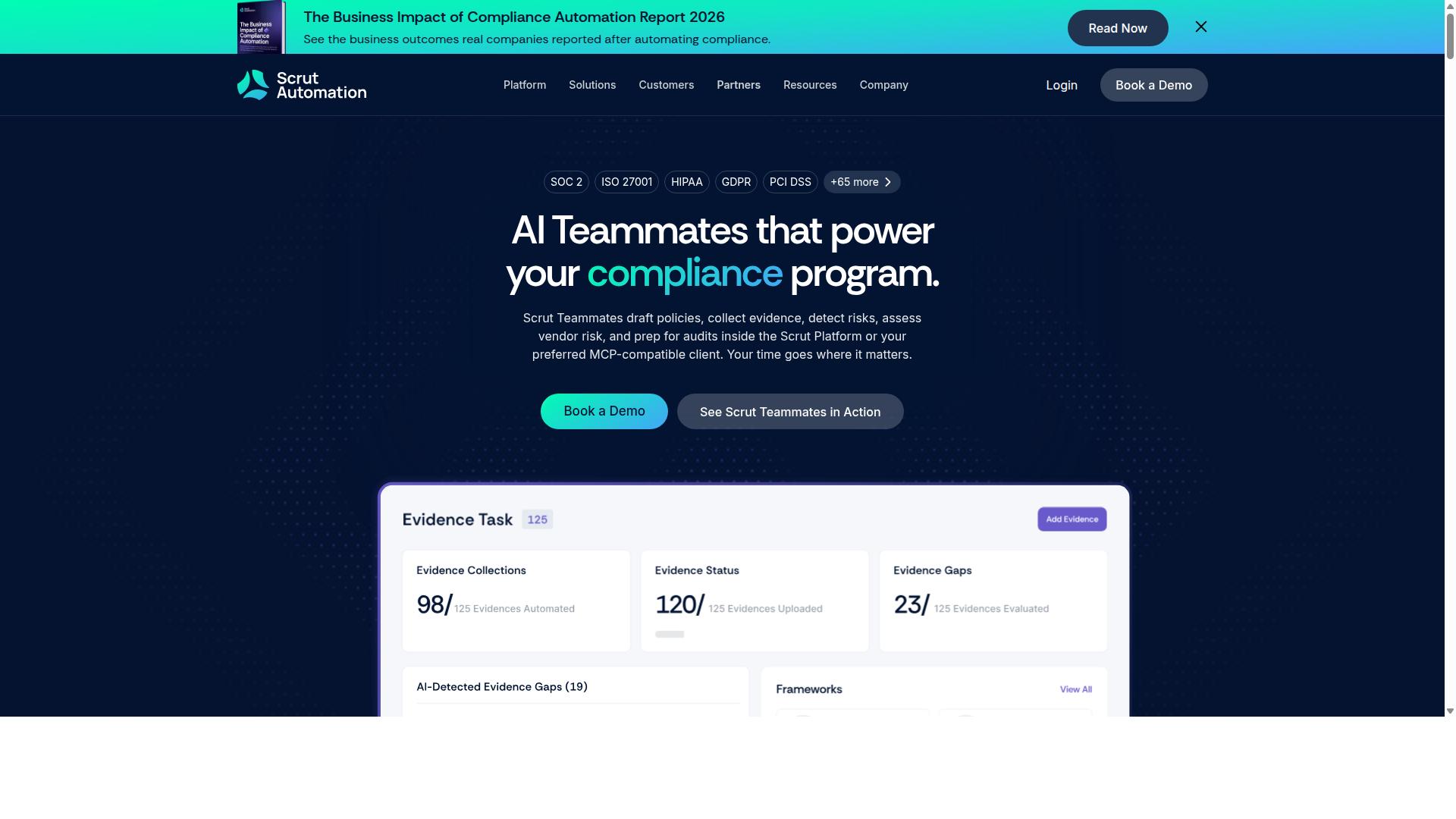
Scrut Automation offers continuous control monitoring and evidence collection for mid-market security teams.
The platform automatically pulls evidence from cloud providers to support compliance frameworks. Teams gain visibility into runtime security, asset inventories, and privilege validation without manual data gathering.
Scrut centralizes policy management, risk assessments, and vendor evaluations for frameworks like SOC 2, ISO 27001, HIPAA, and GDPR. Companies in financial services, healthcare, and enterprise software use the tool to prepare for audits and maintain ongoing compliance.
Users seeking full workflow orchestration often layer another platform on top of Scrut. The system focuses on evidence collection and control monitoring rather than complete business process management or approval workflows.
Scrut serves startups through enterprise organizations across education, travel, and other industries. Organizations that need both compliance automation and broader process orchestration typically combine multiple solutions to cover all requirements.
5. Nintex
Nintex delivers drag-and-drop workflow automation tightly integrated with Microsoft 365 and SharePoint. Organizations that already rely on these platforms gain immediate value from the connector library.
The platform supports both cloud and self-hosted options through Nintex Automation CE and Nintex Automation K2. It also includes Nintex for Salesforce for teams that need no-code workflows inside that environment.
Users can design approval workflows, document generation, and robotic process automation tasks without writing code. Industries such as government, financial services, healthcare, and manufacturing often select Nintex for contract management and compliance projects.
Higher cost tiers unlock advanced analytics features. Non-Microsoft stacks may encounter integration friction when connecting to external systems.
Nintex also offers Nintex for Microsoft to extend automation across Outlook, Teams, and SharePoint lists. The toolset covers process intelligence and application development in addition to core workflow automation.
6. LogicGate Risk Cloud
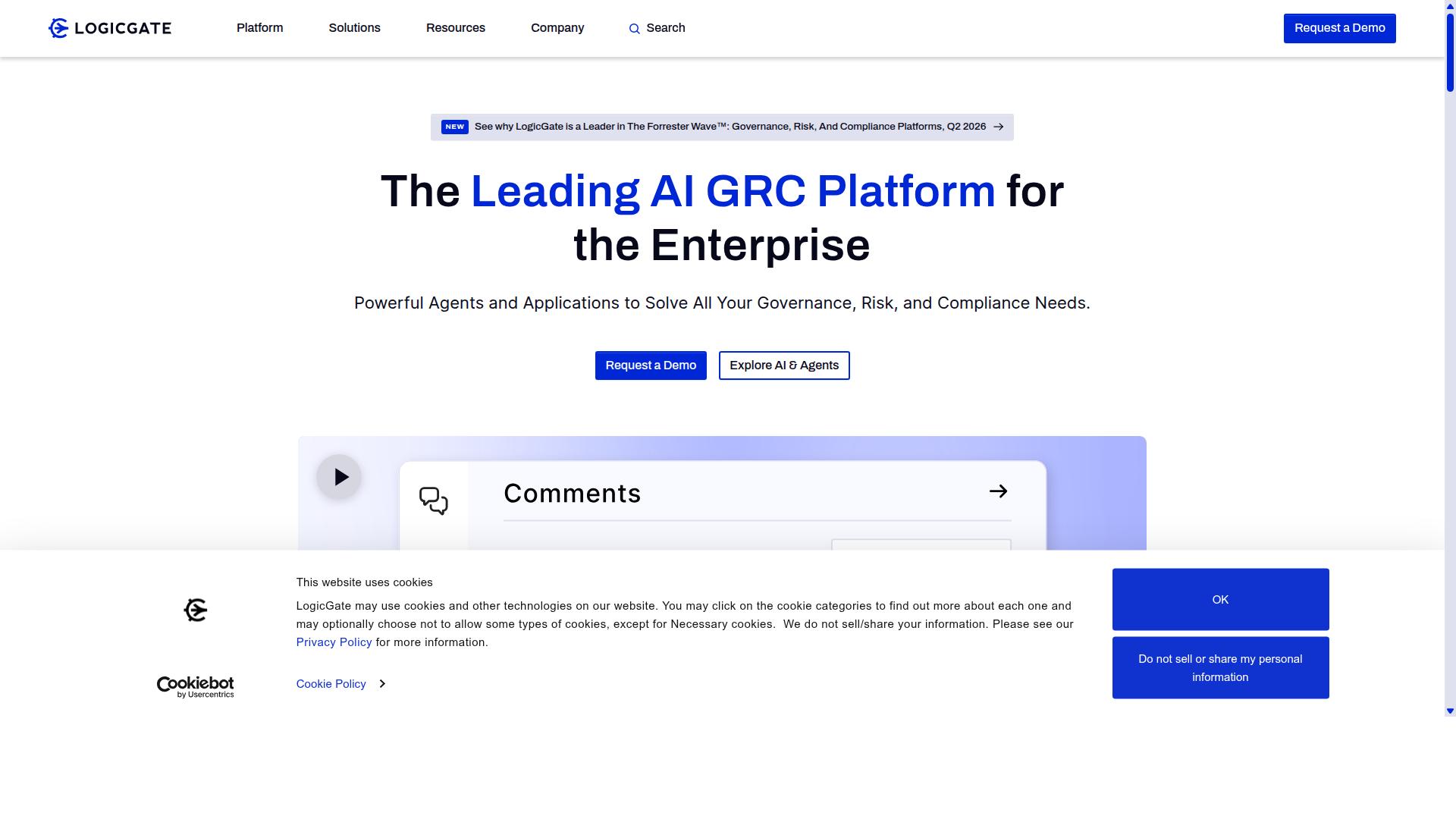
LogicGate Risk Cloud provides configurable risk and compliance workflows for regulated industries. The platform focuses on building structured processes that track and manage risk exposure across departments.
Risk registers form the foundation of the system. Users can create, update, and monitor risk entries through automated workflows that follow established compliance frameworks.
Policy management features allow teams to define, distribute, and track policy adherence. Automated notifications remind employees when policies require review or acknowledgment.
The platform includes drag-and-drop workflow design, real-time dashboards, and integrations with existing systems. Customizable risk assessments and audit trails support documentation requirements in regulated environments.
Organizations seeking broader task automation may need additional workflow tools. LogicGate Risk Cloud centers on risk and compliance rather than general business process management needs.
7. Camunda
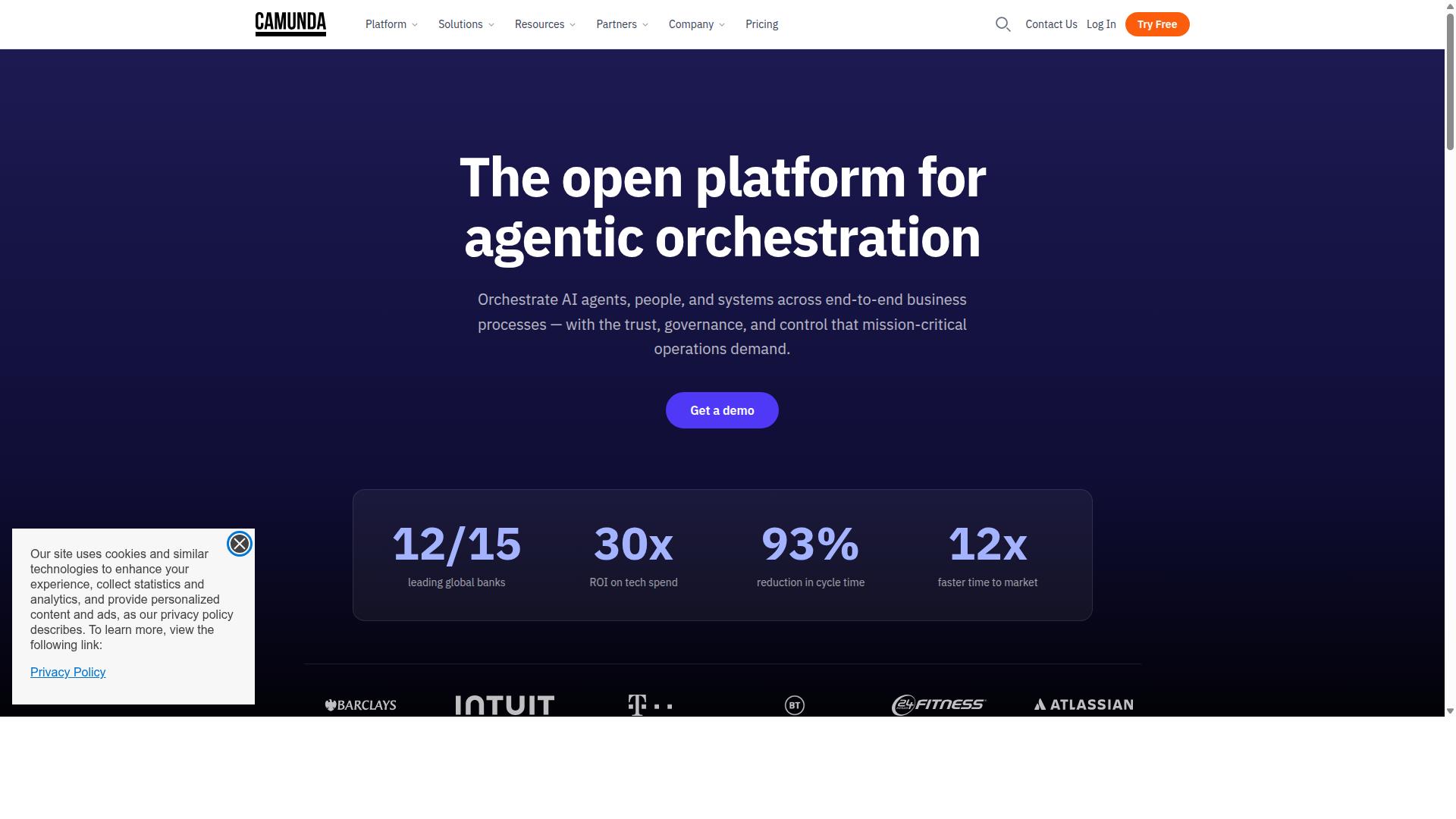
Camunda offers an open-source BPMN engine suited for developers building custom process applications. The platform focuses on process orchestration that coordinates people, systems, and devices across end-to-end business processes.
Organizations choose Camunda when they need a developer-first model with self-hosted deployment options. This approach works well for teams that already have strong engineering resources and want full control over their automation infrastructure.
The platform supports both predefined logic and AI agents for handling unpredictable workflow paths. Deterministic flows work alongside dynamic orchestration, which gives development teams flexibility when designing complex business scenarios.
Teams considering Camunda should plan for in-house engineering resources to maintain and extend their workflows. The open-source foundation requires ongoing technical expertise to implement updates, create custom integrations, and manage the deployment environment.
Research suggests Camunda delivers benefits for organizations seeking scalable automation with AI integration capabilities. The platform suits companies that have the technical capacity to build and maintain their own process applications rather than relying on fully managed solutions.
How to Choose the Right Option
Map your requirements to the platform that best serves your industry, team size, and compliance needs.
| Decision Factor | Buying Guidance |
|---|---|
| Workflow Volume | Teams handling hundreds of workflows monthly should favor platforms with strong process orchestration and task automation capabilities. Consider solutions that include built-in workflow templates to speed deployment across different departments. |
| Compliance Scope | Financial services, healthcare, and other regulated industries need robust audit trail functions and role-based access controls. Platforms offering ISO compliance features and document control help teams maintain standards without manual oversight. |
| Microsoft vs. Non-Microsoft Stack | Organizations already invested in Microsoft tools may benefit from Microsoft Power Automate integrations. Teams preferring broader connectivity often select platforms with multiple integration connectors including Zapier, Make, and n8n options. |
| Dev Resources | Teams with limited development support should look at no-code workflow platforms that include form builder tools and pre-built business rules engine features. More technical teams might explore low-code BPM solutions offering API integrations and process modeling flexibility. |
Final Verdict
Process Street stands out for teams that need both no-code automation and audit-ready compliance in one platform.
The first key differentiator is the combined Docs + Ops architecture. This approach lets users manage structured documents alongside live workflow execution without switching tools or duplicating data.
The second differentiator comes from security credentials. Process Street holds both SOC 2 Type II and ISO 27001 certifications, covering data protection and operational controls required by regulated industries.
The third differentiator is practical speed. IMCD UK reported 75%+ reduction in setup time, showing that the platform can move from procurement to production faster than many alternatives.
Readers comparing workflow automation options should evaluate a proof of concept to see how Process Street performs against their specific requirements.
Recommended Resources: